
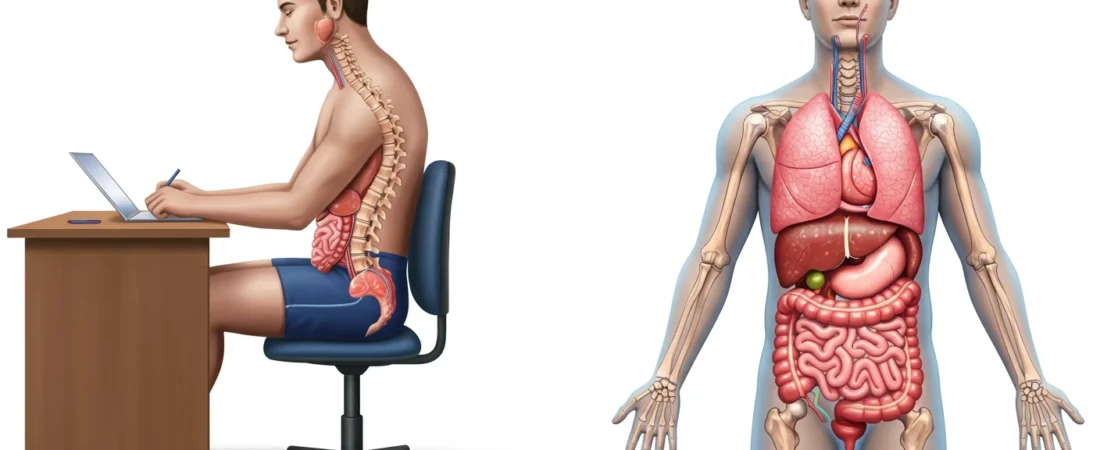
Why Posture and Digestion Are Deeply Connected
Your posture and digestion are more intertwined than most people realize. When you slouch, hunch forward, or sit for long hours without moving, you don’t just risk back pain you also compress your digestive organs, restrict diaphragmatic breathing, and interfere with the vagus nerve. This impacts how efficiently your gut processes food, how nutrients are absorbed, and how signals are sent to your brain. Over time, this subtle but powerful connection between posture and digestion can influence bloating, reflux, constipation, mood, and even anxiety levels.
In this article, we’ll explore the hidden science of how posture affects your gut-brain axis and mental health, the dangers of sitting too much, the vagus nerve’s role, and the best posture-correcting exercises that support both digestion and well-being.
How Posture and Digestion Work Together
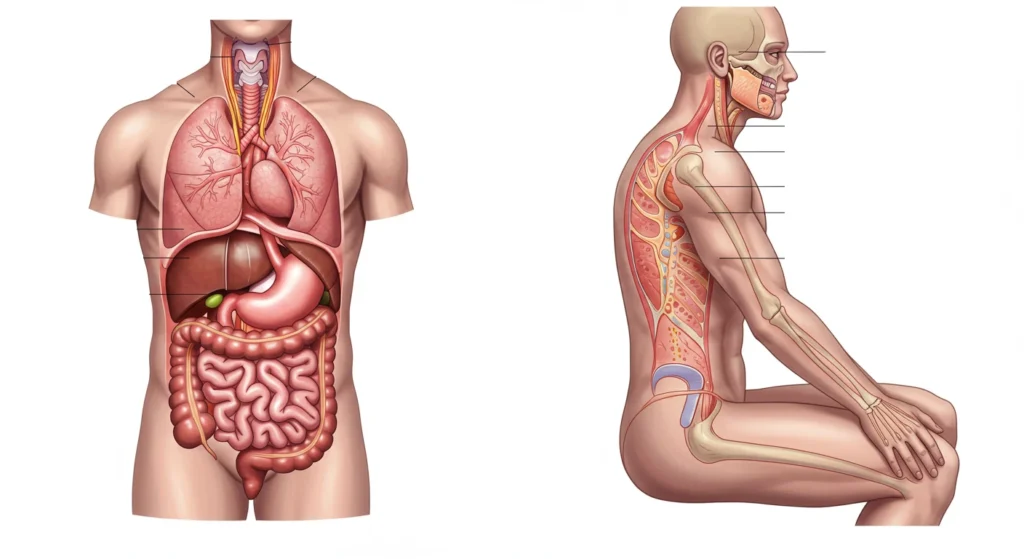
The relationship between posture and digestion is one of mechanics and physiology. When you sit or stand upright, your spine supports the natural curvature of your body, and your abdominal organs have the space they need to function properly. However, poor posture such as slouching forward while using a phone or hunching over a laptop compresses the abdominal cavity. This increases intra-abdominal pressure, slowing peristalsis, the wave-like muscular contractions that move food through your digestive system.
The Role of the Vagus Nerve in Digestion
The vagus nerve, the longest cranial nerve, extends from the brainstem through the neck and chest into the abdomen, directly connecting to the stomach and intestines. In fact, its job is to stimulate digestive secretions, regulate gut motility, and even influence the release of neurotransmitters that affect mood. When posture collapses, pressure on the diaphragm reduces vagus nerve stimulation.
This reduction can weaken the “rest and digest” signals that are crucial for healthy digestion. Research highlights how vagus nerve dysfunction is linked not only to gastrointestinal issues but also to anxiety and depression. As noted in Frontiers in Psychiatry, vagus nerve stimulation therapies have been used to treat mood disorders by improving gut-brain communication (Frontiers).
Postural Pressure on Abdominal Organs
Moreover, poor posture narrows the thoracic cavity and compresses digestive organs like the stomach, intestines, and pancreas. This physical pressure can:
- Increase reflux by forcing stomach acid upward.
- Slow down bowel movements, leading to constipation.
- Reduce blood supply to abdominal tissues, impairing nutrient absorption.
In contrast, an upright posture allows your diaphragm to expand fully with each breath, stimulating digestion and giving your abdominal organs space to move naturally.
Breathing and Diaphragm Function
Posture affects how you breathe. Slouching reduces lung capacity, forcing shallow chest breathing instead of deep diaphragmatic breathing. Since diaphragmatic breathing massages abdominal organs and stimulates the vagus nerve, poor posture indirectly shuts down this vital digestive aid.
Vagus Nerve Posture and Digestion: The Gut-Brain Connection
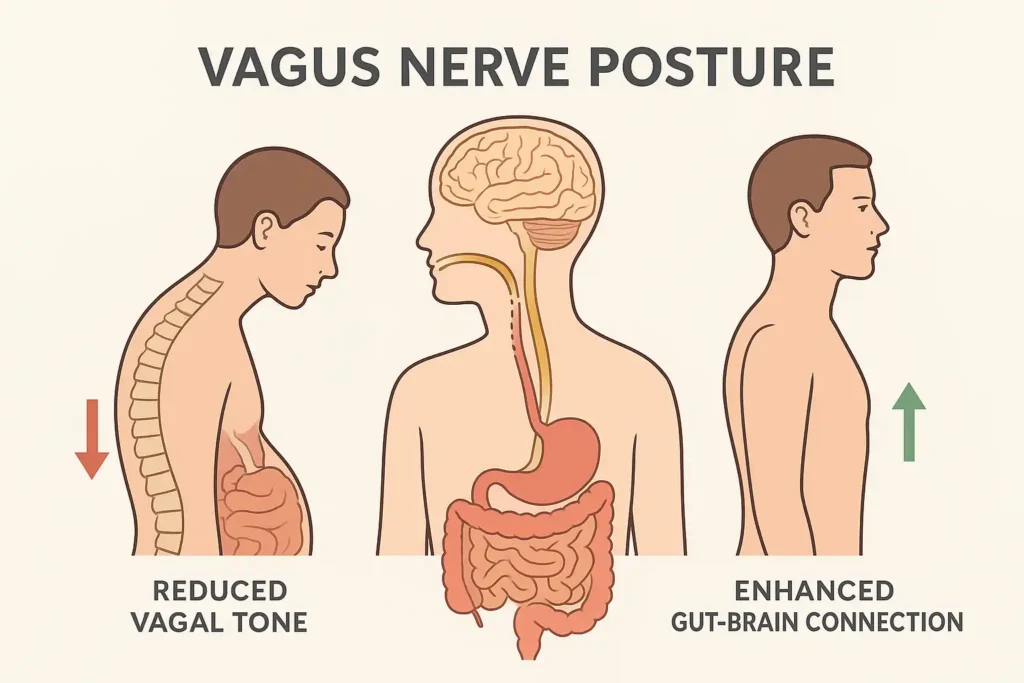
The vagus nerve posture link is one of the most fascinating aspects of human health. Good posture not only keeps your spine aligned but also ensures optimal vagal tone how active and responsive the vagus nerve is.
Why This Matters for Mental Health
The vagus nerve is the main channel of the gut-brain axis. Signals from your digestive system travel to your brain, influencing mood, stress response, and emotional regulation. When posture collapses, vagus nerve activity weakens, which can lead to increased anxiety, reduced resilience to stress, and even depressive symptoms.
According to the Journal of Psychiatric Research, stimulating the vagus nerve has been shown to improve mood and cognitive performance (ScienceDirect). Poor posture, then, may have the opposite effect, dampening vagal activity and harming both digestion and mental health.
How to Stimulate the Vagus Nerve Naturally
You don’t need invasive procedures to boost vagus nerve health. Simple posture and breathing habits make a big difference:
- Sit upright with open chest to allow the diaphragm to move freely.
- Practice deep belly breathing that expands the abdomen, not just the chest.
- Do yoga poses like cobra or bridge, which extend the spine and relieve compression.
- Hum, sing, or chant activities that vibrate the vocal cords stimulate vagus nerve pathways.
Practical Example: Posture Reset
If you spend long hours at a desk, set a timer to remind yourself every 30 minutes:
- Sit tall, roll your shoulders back, and tuck your chin slightly.
- Place one hand on your stomach and take 5 slow breaths, feeling your belly rise.
- Stand up and stretch your arms overhead, opening your rib cage.
This mini-routine realigns posture, stimulates the vagus nerve, and supports digestion.
Posture and Digestion: The Dangers of Sitting Too Much and Mental Health
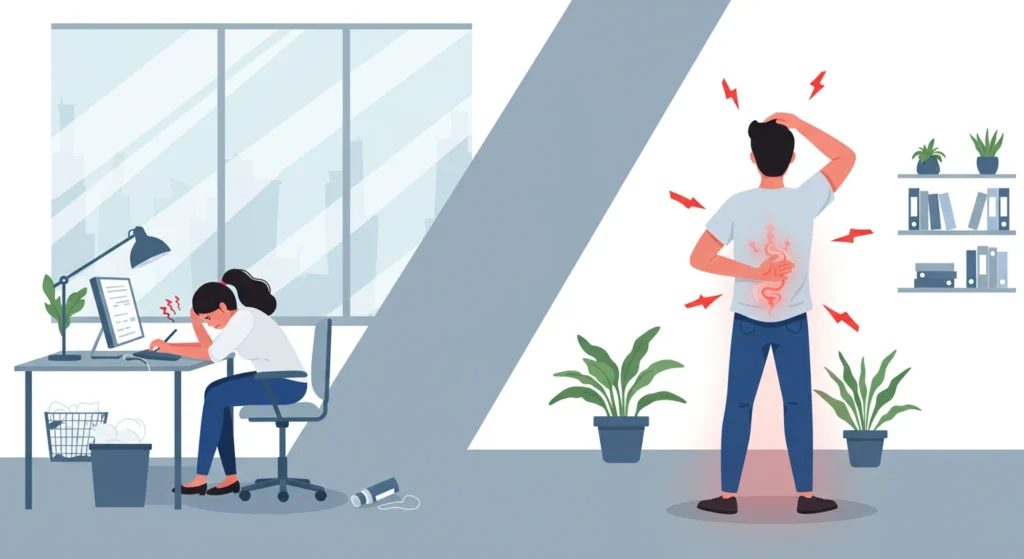
The modern lifestyle often involves sitting for 8–10 hours a day. Unfortunately, sitting too much damages both physical and mental health.
How Sedentary Behavior Harms the Gut
When you sit for long periods:
- Abdominal muscles weaken, reducing digestive efficiency.
- Blood flow to the intestines decreases, slowing metabolism.
- The intestines compress, increasing bloating and constipation risk.
Prolonged sitting reduces peristalsis, the rhythmic contractions of the digestive tract. Without these natural waves, food instead moves sluggishly, and as a result, this leads to discomfort and poor nutrient absorption.
Mental Effects of Sitting Too Much
Extended sitting also affects the brain. Moreover, low physical activity reduces oxygen delivery, increases fatigue, and is linked to depression. A 2020 study in BMC Public Health found that reducing sitting time by just one hour per day improved mental well-being and quality of life.
Micro-Movements to Break Sedentary Cycles
You don’t have to hit the gym to offset sitting risks. Small, frequent movements are enough:
- Stand up and stretch every 30–45 minutes.
- Walk while talking on the phone.
- Do seated twists to mobilize the spine and massage abdominal organs.
- Use a standing desk if possible.
These micro-breaks improve circulation, enhance digestion, and stimulate the vagus nerve.
Exercises to Improve Posture and Digestion
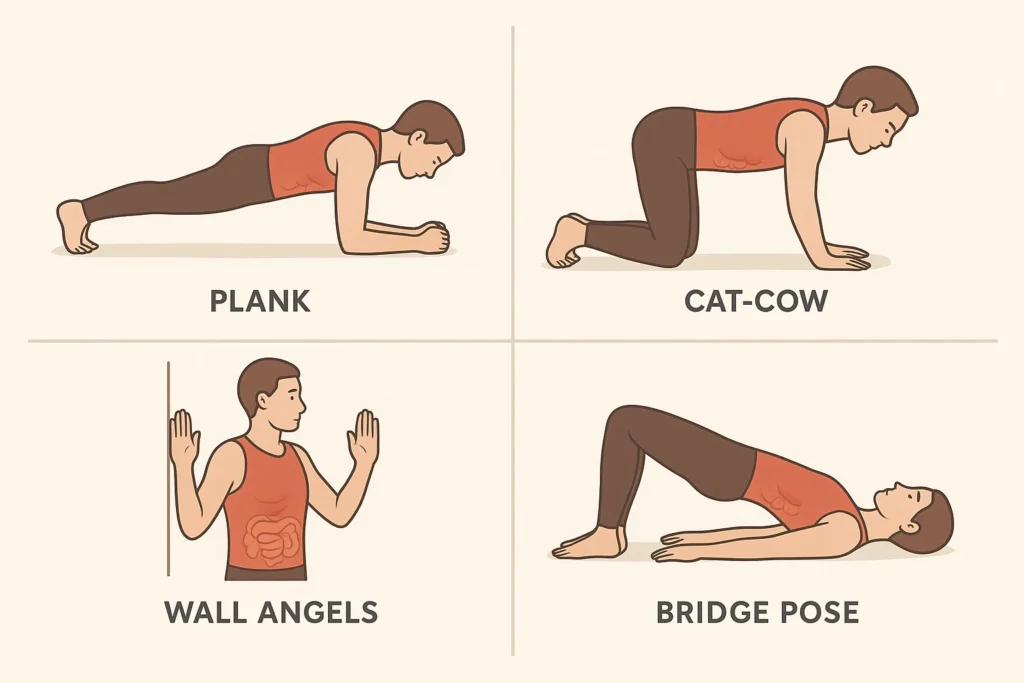
Improving posture requires consistency. The right exercises to improve posture not only reduce back pain but also enhance digestion by freeing the diaphragm and stimulating core muscles.
Best Exercises for Good Posture
- Planks – Strengthen abdominal and back muscles, supporting spinal alignment.
- Cat-Cow Stretch – Improves spinal flexibility and massages abdominal organs.
- Bridge Pose – Opens hip flexors, which often tighten from sitting.
- Wall Angels – Strengthen upper back muscles, correcting rounded shoulders.
- Seated Spinal Twists – Gently stimulate digestion and improve spinal mobility.
Daily Habits to Reinforce Exercises
- Keep feet flat on the floor while sitting.
- Avoid crossing legs for long periods.
- Adjust screen height to eye level.
- Use lumbar support cushions when sitting for extended periods.
How Exercise Directly Affects Posture and Digestion
When posture muscles are strong, the diaphragm can move freely. This enhances oxygen intake, massages the digestive organs, and stimulates vagus nerve activity. The result: improved motility, reduced bloating, and better nutrient absorption.
Posture and Digestion: Back Posture and Its Direct Impact on Digestive Health
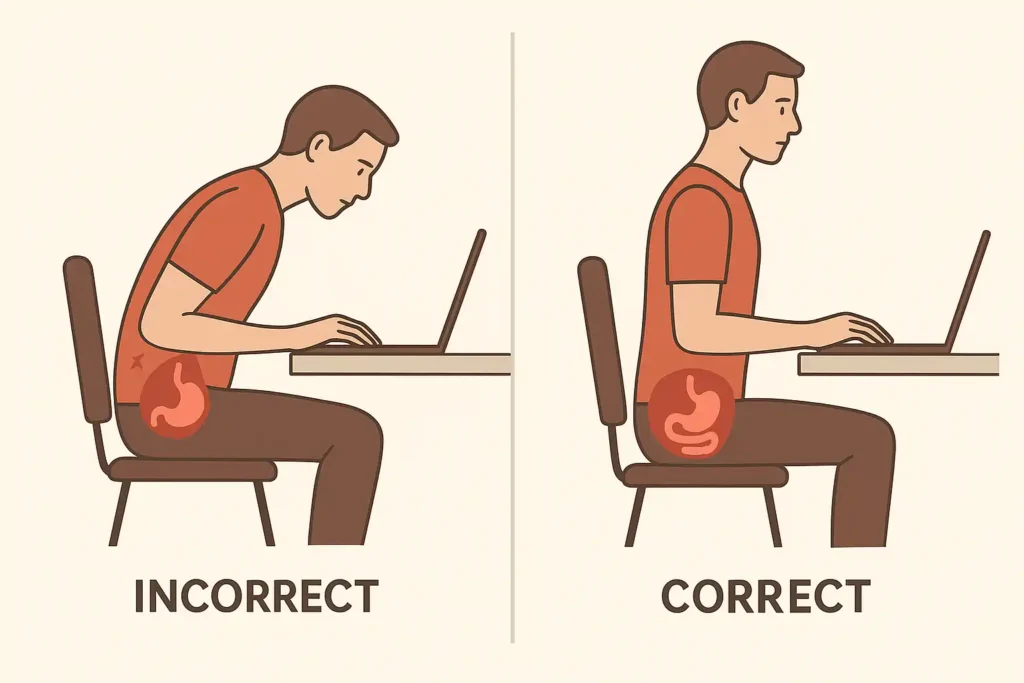
Your back posture is the foundation of both spinal and digestive health. A neutral spine ensures that the diaphragm, abdominal cavity, and digestive organs function at their best.
Correcting Back Posture at Work
- Keep monitor at eye level.
- Position keyboard so elbows form 90-degree angles.
- Sit back fully against the chair with lumbar support.
- Take standing breaks every hour.
Mind-Body Benefits of Proper Back Posture
Proper alignment allows the diaphragm to contract and expand efficiently. This:
- Reduces acid reflux by keeping stomach acid down.
- Improves peristalsis by encouraging abdominal motion.
- Supports mental clarity by improving oxygen flow.
As Harvard Health Publishing notes, good posture reduces strain on muscles and ligaments, preventing not only musculoskeletal pain but also secondary issues like shallow breathing and poor circulation (Harvard Health).
Conclusion
Your posture and digestion are deeply linked through the vagus nerve and overall gut-brain health. Poor posture compresses abdominal organs, disrupts breathing, and weakens vagal tone leading to digestive problems and mental distress. But by improving posture through mindful sitting, standing, movement, and targeted exercises, you can restore this vital balance.
👉 Take charge today: commit to just 5 minutes of posture exercises daily and notice the difference in your digestion, energy, and mood within weeks!
Comprehensive Support for Healthy Joints, Back, and Muscles: Relieve Pain and Improve Mobility!Related posts:
 Sustainable Healthy Lifestyle: Foods & Habits for Beginners
 Blue Zones Lifestyle: The Secrets from World’s Healthiest People
 Adaptogens for Stress and Anxiety: Restore Your Mental Balance
 Intermittent Living: The New Biohacking Trend
 Infrared Sauna: Is Infrared Sauna Therapy the New Detox Miracle?
 Histamine Intolerance: Hidden Cause of Headaches and Fatigue